Showing posts with label Swords & Wizardry. Show all posts

Sunday, April 21, 2019

Top 5 Desert Island RPGs

This is in response to DravenSwiftbow’s recent video of his Top 5 Desert Island RPGs. Dave gave a good, solid list which emphasized diversity of genre and system over depth within any one game. He picked self-contained core rulebooks (and one box set) which makes sense. He ended the video asking for people to give their own lists of whatever number or classifications in the comments. Because I’m a wordy dum-dum, I decided to write a short blog about it rather than dump a huge block of text in Dave’s comments.

There are too many ways to do this I’m going to multiple lists. First, I’ll try Dave’s idea of multiple genres. I’m not a big sci-fi fan, but Warriors of the Red Planet would give me exactly what I want from that genre in one slim little volume. For horror, I’d pick the sixth edition of Call of Cthulhu because it’s in one volume (and it's the one I own) and benefits from the advancements made over several editions while still hewing closely to the original vibe. For something more exotic, Empire of the Petal Throne is perfect for its complete world that's intriguing and mysterious. (I just realized that Geoffrey McKinney’s Carcosa falls at an intersection of all three of these games.) For something to fill the D&D slot, I’ll pick the Holmes Basic box set – either the first printing with the geomorphs and the monster & treasure assortment, or the next one with B1. It may only go up to level 3, but you would be free to extrapolate the rest as you saw fit, and in terms of a ruleset that really totemically gets to the core of the D&D vibe, it’s hard to beat. I’m not really big into superhero games or cyberpunk, so I don’t really have a fifth pick. I guess I’ll choose MERP for nostalgic reasons.

Another way to look at this is to pick setting books, modules, and toolkits instead of an actual game system. Once you’ve played TTRPGs for long enough, it’s easy enough to pick a core mechanic and make up your own system. Many of us can play D&D without the rulebooks by now, so perhaps the best bet would be to bring something with lots of random tables to help generate an infinite amount of adventure. The danger with just picking modules is that it’s an endless trap. Picking five modules to run forever is pretty limited, no matter how sandbox-y they are. There are about five really good megadungeons out there which would keep you busy until the end of time, but it would get a little same-y after a while. Campaign settings can be really good and open (various 2e AD&D, Dolmenwood, and Midderlands), but their specificity doesn't always give you the latitudes you might like.

As far as toolkits go, books like Veins of the Earth can give you procedures to build your own campaign world, but you need to choose them wisely to give you a breadth of settings. You could choose something like the Fight On! compendium of Vol. 1-4, John’s Stater’s NOD or Hex Crawl Chronicles, or James V. West’s Black Pudding collection which are all filled with great ideas. The Judges Guild really perfected this kind of variable setting supplements with their Ready Ref Sheets, City State of the Invincible Overlord, Wilderlands of High Fantasy, Dave Arneson’s First Fantasy Campaign, and any of their early modules (Tegel Manor, Caverns of Thracia, Dark Tower, or Citadel of Fire). You could do a lot worse than just picking five things from the early JG stuff.

In terms of something self-contained, any of the OSR retroclones would really do the trick. Basic Fantasy, Swords & Wizardry, Labyrinth Lord, Delving Deeper, OSRIC, DCC, Lamentations of the Flame Princess, Blueholme, and many others give you everything you need in one book. In all honesty, one of these games is all I would need. Whatever you wanted to change you could house rule into your own system and in a lot of cases the clones are easier to run than the original games because of some of their modern innovations. However, these kinds of desert island questions aren’t just about practical usefulness. It’s about inspiration too, and that doesn’t always match what’s pragmatic. Sometimes it’s about what brings you joy, even if that comes from a place of nostalgia and sentimental attachment.

To speak to that, although it would be nice to have a breadth of systems or genres, in the end, I really just want to play some form of D&D. It’s my first love in this hobby and what I’d choose over anything else. If I was going to Frankenstein a nice feel-good collection of five D&D products, I suppose I would pick the Moldvay Basic set (with B2 Keep on the Borderlands), the Cook/Marsh Expert set (with X1 Isle of Dread), the 1e AD&D Dungeon Masters Guide by Gary Gygax, the 1e AD&D Monster Manual, and the original edition’s Gods, Demi-Gods & Heroes (the original, unedited version, not the incomplete WotC resissue). Even though these five span three different editions of the game (0e, 1e, and B/X), this is D&D to me. I’m one of those people who feel all TTRPGs in some way are just house-ruled versions of the original (this drives people nuts, sorry).

In that spirit, maybe the best choice of all would be the original game and its four supplements: the white box (with the 3 LBBs), Greyhawk, Blackmoor, Eldritch Wizardry, and Gods, Demi-Gods & Heroes. You can extrapolate everything from these five, and in fact, we as gamers have over the last 40-some years. What are yours?

Sunday, April 14, 2019

New Games and Campaigns

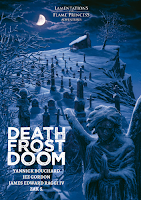
Today's post is really just a way for me to get down in writing what I'd like to focus on in gaming for the rest of the year. My regular Basic Fantasy campaign is winding down. We were going to end it last session, but we needed to cut it short due to time, leaving the PCs halfway through Death Frost Doom. We were supposed to finish it off today, but real life got in the way. In any case, we only have one more session left which means I'll more time to try out a lot more games and put energy into other projects.

First up, I'm working on polishing my notes for the city of Slateholm and submitting it to the Basic Fantasy Workshop. These were all the loose pages of scribbled notes and random tables I used for that portion of my campaign. My players only touched a very small part of it for the couple of sessions they were there and I think there's enough good stuff there to be useful to someone running Morgansfort. My intent with this isn't for these notes and tables to become their own module, but more just in the spirit of sharing what I put together.

Next, I've been slowly working on a draft of an adventure for Basic Fantasy. My idea is pretty large, and I'd like to playtest it before submitting it to the Workshop. At the core is a neat little dungeon idea surrounded by a mini-hex crawl. I think there's a lot of potential for it. I don't think I'll have a draft by the end of the year like I'd hoped, but if I can get the central dungeon written and tested along with the nearby town and surrounds, that will be good.

I'm also chipping away at fleshing out the one-page dungeon I submitted to the One-Page Dungeon Contest last year (I was one of the many runner-up winners). I think I tried to pack too much into the one-page concept and there was a lot of vague details left for the GM to fill in. I was initially going to write this for an OD&D-type system, but tonally it doesn't quite fit (perhaps Swords & Wizardry). There's some body-horror elements that are actually more of a fit for a Lamentations of the Flame Princess or Dungeon Crawl Classics adventure. I'm less comfortable with those systems, however, so we'll see what I think once it's written. I think if I just pitch it to a Basic-style game, I'll be in the ball park, at least.

Speaking of OD&D, I have a hankering for writing a couple of small scenarios for either or both Iron Falcon and Delving Deeper. S&W is pretty well-supported with adventures, but IF and DD each have their own flavor of the early game which I think is worth supporting. All of these adventures will need to be played through too, so I plan my gaming for the next several months to be running various versions of OD&D.

A side benefit to running all this 0e will be that it will help me to really figure out what I like or don't like for my own 0e system I'm putting together. I know that the last thing the RPG community needs is another OD&D clone, but it's really just a way to put my own house rules together in a format to share with players. I'll probably put it up on Lulu for free digitally and a print version at cost, but the main purpose won't be commercially-driven.

I've also, strangely enough, been looking at 5e. One of my players in my local group wants to run a campaign and I'm curious to get a feel for the system that everyone is playing. I've taken a good look at the free Basic Rules, and while I think there is some good things about it, I'm not quite sold on it. There are some things that I still have hard time with. I'd like to give it a fair shake though.

And because I can't leave well enough alone, I've started putting together, not just one, but two different set of hack rules for 5e based on the SRD. In other words, 5e if I had written it. It's a little bit of an experiment. How much can I take out and still stay true to the rules or the spirit of the rules. Can I make a version of the game I'd want to play, but still use the same engine to be 5e-compatible? It's my way of getting under the hood and learning the system as well.

All this for 2019 and I'd still like to play a little Call of Cthulhu and Empire of the Petal Throne as well. I suppose it's better to be busy than bored.


Thursday, January 3, 2019

Ability Mods and Hot-Rods: The Dangers of Mixing Basic and Advanced D&D

I’ve been thinking a lot about the ability score modifiers throughout the various editions of D&D lately (actually the past year), and how these differences affect the game. Turning them over in my mind, I hit upon a revelation as it related to primary differences between the modifiers in 0e, Holmes*, 1e, and 2e and those in B/X and BECMI. The modifiers are not only the primary drivers for how these two different platforms of D&D work, but they are the reason why mixing the mechanics between the Basic and Advanced rules can create a broken game.

Before I dive into an analysis of the modifiers themselves and why I think the Basic-AD&D hybrid is such a volatile combination, let me first give a little contextual autobiography. This is something I think I’ve covered in a past post, but it’s worth repeating here since it’s relevant. I started playing Mentzer Basic (Red Box) in about ’84 or ’85. My friends and I played “Basic” for a year or two before bowing to the older kids’ wisdom that “Basic (was) for babies” and moved to AD&D. When I say we played AD&D, I mean we borrowed what we liked from the Advanced game and used it in our Basic campaign. AD&D tournament-legal, we were not. At the time I felt guilty and conflicted about it, like we were cheating, not playing by the actual rules because AD&D had more rules than I cared to keep track of. It was (and still is) hard to run AD&D by the book.

When I came back to the hobby after twenty-some years (I stopped as 2e began taking over), I found the OSR and was surprised to learn that a lot of people played the game the way I did back then, mixing Basic and AD&D. In fact, I heard a perfect description of it in one of Matt Finch’s interviews with Greg Gillespie (creator of Barrowmaze). Greg described his early gaming (at 5:30, here) as using the engine of Basic and Advanced as the chrome. That’s exactly it. We used a lot of the core rules from the Basic game (ability mods, combat mechanics, etc.) and the character options (more races, more classes, no race-as-class), spells, monsters, modules, and magic items taken from Advanced. We took the cool stuff and left everything that bogged the game down (weapon speed factors, spell segments, damage-by-size, etc.). To extend Greg’s metaphor we created a hot rod of a game. It ran fast and powerful, exciting and flashy. It also eventually overheated and blew up.

What I mean by that is our game became incredibly imbalanced, particularly when our PCs started reaching higher levels. D&D has always had a problem with balanced high-level play, but we felt the effects far earlier and I think with some perspective I understand why. Both the Basic and the Advanced games were built to be balanced within their own rule sets and were not intended to be mixed. That balance begins, and in some ways largely rests, on how each game’s ability score modifiers fit with the rest of the rules. In my case, I’m talking about using Basic’s ability score modifiers with AD&D’s more powerful character options.

For those who haven’t played any early D&D, the ability modifiers break down thusly. OD&D, Holmes, and AD&D have ability modifiers that are really flat by today’s standards. The modifiers are not standard across the abilities and in some cases, even the extreme ends of the 3-18 range only give a -1 or +1. Some abilities don’t necessarily give a modifier at all. There is a real appeal to these more tempered modifiers for me. A “5” in Dexterity only affects your AC by 1, not 2. A “7” in Strength doesn’t hurt your melee to-hit roll at all. Even a Constitution of “3” only takes 1 off your hit die roll. On the other hand, the bonuses are likewise more mellow and oftentimes the difference between a “15” and an “18” doesn’t seem to have as much mechanical separation as I would normally expect.

By contrast, the Moldvay/Cook/Marsh B/X rules from 1981 and the following Mentzer BECMI rules have a much different approach to the ability modifiers. The modifiers are almost nearly universally applied the same way across all the abilities with the following scores: 3 (-3), 4-5 (-2), 6-8 (-1), 9-12 (+0), 13-15 (+1), 16-17 (+2), and 18 (+3). These aren’t as dramatic as the d20-era or current 5e modifiers, but this array creates a nice, dynamic bell curve where the widest range is an average non-mod, and each deviation from that average range gets progressively smaller. There’s an elegant, standardized symmetry to it. It’s also very swingy. There’s a real difference between a “15” and an “18” here that feels powerful, and at the same time, a “5” Dex or “3” Con are really damaging.

Here’s where it’s helpful to look at how each of these sets of modifiers fit within their respective rule sets, which makes it clear how combining some of the AD&D mechanics with the Basic modifiers can imbalance the game.

AD&D’s standard classes are little better than their Basic counterparts (Clerics get d8 hp and spells at first level, Fighters get d10 hp with faster attack progression, Thieves get better skill percentages and d6 hp, Magic-Users get more, and higher-level spells), not to mention the specialty classes (Paladin, Ranger, Druid, etc.), each of which have special powers. These extra goodies complement the lower impact ability modifiers. The smaller modifiers keep things relatively sane when the first magic items start showing up in the campaign. Magic items, it should be said, were expected to be rewarded somewhat early in both Basic and AD&D games, in part to help with characters’ survival. A +1 long sword in the hands of an AD&D Fighter with an “18/49” Strength means a composite +2 to-hit and +4 to damage. The same +1 sword in the hands of Basic Fighter with an “18” Strength means a +4 to-hit and a +4 to damage. This extra +2 to-hit is a big difference, and it’s due to Basic’s souped-up ability mods.

The Basic game didn’t have as many bells and whistles as the Advanced game, but those ability mods picked up the slack by being really dynamic, and potentially very powerful. When stacked with the extra AD&D class benefits and hit die, it could make for some supercharged PCs. Another dangerous crossover between rules was using the Method I of rolling for ability scores from AD&D with the Basic ability mods. Method I is the popular “roll 4d6, drop the lowest” method which is designed to make sure every PC has at least two scores of “15” or higher (which remember, in AD&D, have smaller modifiers). The AD&D PHB even says that it’s essential to the character’s chances of survival. Using this method in a Basic game increases the likelihood of not only 15s, but 16-18s, giving you a huge boost. It also makes the Basic rules’ more-punitive negative modifiers less likely. Along with higher mods, the higher levels of spells in the Advanced game (7th level for Clerics, 9th for Magic-Users) means real firepower enters the campaign.

AD&D mechanics may seem wonky by modern sensibilities. There isn’t a standardized core mechanic. In fact, there are a number of different systems for determining success or failure (d20 attacks, % Thief skills, d6 open doors/listen checks, etc.). But when all the rules are used in conjunction together, it fits together perfectly and ticks like Swiss clockwork. It just takes time, dedication, and practice to become fluent in the 1e rules (at least that’s what die-hard 1e grognards claim). Tom Moldvay’s game is likewise very well-balanced, but it’s more streamlined and elegant. It isn’t built to simulate reality in the same way Gary’s rules seemed to try to do. Tom’s modifiers (I actually don’t know if he came up with them, but his rules mark their first appearance I’m aware of) are a big part of how that game runs. They drive a lot of the way things work.

You may ask what the point of all this is. Am I just trying to validate my guilt for hot rodding the games I played as a kid? I guess the reason I’ve been thinking about this so much is two-fold.

First, it makes me realize part of my reticence to try 5e lies in the fact that it appears to be an even more exaggerated example of my Basic-AD&D hybrid. The crunch of the d20 rules may have been reduced, but the even more dramatic ability score modifiers combined with even more class and race options, abilities, feats, skills, and proficiency points all indicates a game that falls into all the same hot rod traps I found as a kid.

Second, my musings are in response to a lot of people, both young and old, getting into the OSR versions of the older games and talking about bringing in Advanced options into the Basic game. We often talk in the OSR about cross-compatibility between any of the early versions, and while that may be true to a large extent for running adventures (usually it’s just adjusting armor class a bit), it gets a bit trickier when it comes to combining rules mechanics around characters.

Goblinoid Games just put out their combined Advanced Labyrinth Lord set of rules which is being marketed as “advanced first edition as you remember it,” the distinction being not as first edition was, but as we all played it, stripped of the fussy rules no one likes. Now, I don’t own the new book, but I do have the physical copy of the regular rules as well as the previous no-art PDF of the Advanced Edition Companion supplement. Daniel Proctor wrote a good game and is careful to mention caveats, like giving higher hit die might affect the game if used. It’s presented as rules you could use ala carte or as a whole. I just wonder how the hybrid actually operates in play, especially at higher levels. I’m not implying that a Basic-Advanced hybrid can’t be done, but I think it would need to be carefully done.

I currently run Basic Fantasy which is a slightly modernized version of the old Basic game. It’s well-balanced and runs exactly how I expect it to. The Moldvay modifiers are present, but a few rule changes have been made to give the Basic system a little Advanced boost. Race-as-class is gone, as are demi-human level-limits. Thief skills are closer to the better 1e percentages and to-hit advancement is a little more aggressive. And yet, hit dice are kept relatively low, Clerics don’t get spells at first level, and the magic is kept within reason.

However, I constantly see people on BFRPG forums and Facebook groups who are looking for creator Chris Gonnerman to formally publish some of the supplemental classes and rules from the game’s download page which have a more Advanced flavor (paladins, rangers, druids, weapon proficiency rules, skills, higher level spells from his Iron Falcon, etc.). A lot of these supplements are pretty good (I have a paladin in my current campaign), but Chris’ refusal to add them to the core game makes me happy. He’s willing to let people explore and share options for his game through the OGL, but not willing to canonize these options as core rules themselves. Anyone’s free to hot rod their own games, but at their own peril.

I don’t mean this to be a bad-wrong-fun rant or suggest that the way some people like to play isn’t correct. It’s more of an observation about my own adult preferences and making peace with the mistakes of my youth. It’s also me trying to determine how I approach my games in the future. I still haven’t fully satisfied my curiosity with ability score modifiers.

I like the Moldvay modifiers, in part because I grew up using them, but also because of their clean, standardized, logical symmetry. Their larger range makes a character’s abilities more dramatic and mechanically meaningful. Although I have found that low scores in Strength, Constitution, and particularly Dexterity can cripple a PC. The Thief in my current game has a “5” Constitution (-2) which means he has to roll a “4” in order to add more than one hit point when he levels up.

I like the idea of shallower OD&D modifiers in something like Iron Falcon or Swords & Wizardry, but without the AD&D extra hit points and abilities they almost seem to necessitate a campaign which includes at least a moderate amount of magic items (something I’m stingy with, as a low-fantasy GM). I did see one 0e option recently that appeals to me. Jimm Johnson from The Contemptible Cube of Quazar blog has his own house rules posted for his Planet Eris campaign. HIs universal modifier array is: 3 (-2), 4-6 (-1), 7-14 (0), 15-17 (+1), and 18 (+2). I like these a lot. The bonuses/penalties are flatter than Moldvay’s, but there’s still symmetry with a dynamic flare at the extremes. It strikes me as a nice compromise. I’d like to try some flatter modifiers out soon. It would be interesting to not rely on ability mods as much as I’m used to.

No matter what I decide to go with in the future, I’ll probably still have a hard time leaving well enough alone. Old hot rodders die hard.

* Yes, I know the Holmes set of rules is actually the first Basic rules set, but as far as the ability mods go, I believe they’re the same as the 3LBBs.

Sunday, November 25, 2018

Greyhawk Dexterity Modifier to Armor Class: Just for the Fighting Man?

Okay, this is going to be a hardcore nerd post. I’m going to indulge into a bit of rules minutiae. I’ve been digging in my OD&D books lately because I plan at some point to do a post comparing the different retro clones and how closely they hew to the source. I’m not interested in finding out which is the most authentic, but rather, I’m curious to note how the small deviations actually affect play at the table. Whether intentional or not, these small mis-readings or diverse interpretations are just as interesting to me as any factual historical account of how particular rules came to be.

In looking at how ability score modifiers changed from the 3LBBs to Greyhawk, I noticed something I had never come across before. I did a little poking around in the old forums and didn’t find anything about it either. It could be that I missed an article or just that no one has ever posted about it because it’s so universally known. I came across a passage that seems to suggest that the Dexterity modifier as it is applied to Armor Class is a benefit exclusively enjoyed by the Fighting Man.

What prompted me to check the Dexterity modifier in Greyhawk in the first place was noting how different the Dexterity modifier table in Iron Falcon was from the parallel table in Swords & Wizardry Core (which is the 3LBBs plus Greyhawk). In S&W Core, the Dexterity modifier is universal to all classes as better by 1 for scores of 13-18, and worse by 1 for scores of 3-8. The Iron Falcon table showed the Dexterity modifier giving a Dex score of 0-14 gives no bonus or penalty, a score of 15 improves AC by 1, a score of 16 by 2, a score of 17 by 3, and a score of 18 by 4. This modifier is applied only to Fighters, with an alternate option to apply it to all classes at the GM’s discretion*.

This wide discrepancy again sent me to my copy of the first supplement. Again, I’m not particularly interested in what Strategic Review article or late-era Gary interview may have influenced Chris Gonnerman or Matt Finch to write their charts as they did. I’m more interested in comparing them to the original to see how the changes might affect the game one way or the other. What I found in Greyhawk was surprising.

It turns out that Iron Falcon’s Dex mod chart replicates what is laid out for Dexterity’s effect on AC. The relevant passage on the middle of page 8 of Greyhawk reads:

“Dexterity affects both the ability of characters to act/react and fire missiles. It is also the prime requisite for thieves. Fighters with a dexterity of greater than 14 can use their unusual manual dexterity to attempt to dodge or parry opponents’ attacks. For every point over 14 they are able to reduce their opponents’ chances of hitting them by 1 (5%).”

The Iron Falcon chart reflects this passage exactly, a bonus of 1-4 for scores of 15-18, and no mention of a penalty to AC for a low Dexterity. What struck me most was that it specifies that the fighter receives this bonus. Now it’s possible that Gary was using “fighter” as common parlance for Player Character combatant – meaning any character of any class. However, “fighter” is used as shorthand for the Fighting Man class all over Greyhawk. There is also a passage earlier on page 4 that seems to reinforce this idea the fighter-only Dexterity mod to AC:

“Fighting Men: Other character-types may engage in hand-to-hand combat, but only true fighting men are able to use their strength and dexterity to utmost advantage in melee.”

When viewed next to the wording of the passage on page 8, it would seem only fighters would be able to use their Dexterity in combat to avoid a blow. Thieves may be the most dexterous, but their class lacks the combat know-how to take advantage of it in close-combat. While I may not want to run my games that way, the intention of the rule seems pretty clear.

What is interesting to me is how Swords & Wizardry (and other simulacra) apply the AC modifier to all classes, as AD&D did in 1978 (PHB), B/X did in 1981, and every edition did thereafter. (Holmes in 1977 is a notable exception as it used the 3LBB rules more closely.) I’ve always played it with all classes getting the AC mod. Everyone I’ve ever known has played it that way. It’s as if everyone missed the exclusivity of this rule, or simply, like me, decided, ‘Nah, I’m not going to do it like that.’ In any case, how that conscious (or not) re-interpretation affects the intent of the rule is pretty huge.

First, applying the Dexterity modifier to AC for all classes makes Dexterity much more important. Many modern players feel that Dexterity is the true God Stat – it’s useful to everyone no matter what your class. Finch, in his WhiteBox rules’ alternate Universal Attribute Bonus rules, gives the -1/+1 modifier option for Dexterity to AC. There is a caution that it maybe should be limited to more swashbuckling campaigns without a lot of armor. There is an implied recognition that having Dex affecting AC makes the stat have a very powerful impact on the game.

Next, by giving this benefit to all classes, it takes something special away from the fighter. If only the fighter gains this benefit it makes this class much more powerful. When paired with the rule that only fighters use Strength bonuses for melee attacks and damage, it truly differentiates this class from the others and makes the cleric not nearly as good at combat (one of these days I’m going to write a post about how the 3LBB cleric is OP). If you use the strict interpretation of the rule (as S&W does with Strength to-hit & damage), that fighters, and only fighters (no paladins or rangers), get this benefit, it makes playing a bog-standard character much more appealing.

It should be noted (as was pointed out to me*) that S&W’s application of Chainmail’s man-to-man parrying rules does give some of that power back to Fighters. However, a parry is an active action taking the place of an attack, which is not as great a boon as a passive AC boost. Still, some of that Fighter “specialness” is preserved. In Delving Deeper, for instance, parrying is a non-exclusive action for any class.

As for how I feel about using this in my own games, I’m pretty sure I won’t. Possibly because my players would revolt. Partly because I grew up playing the game with AC being affected by Dex for all classes and it’s what I’m used to. More than that though, is the affect it would have on my game. Magic-users would be even more fragile than they are. Thieves would be less-likely to engage in combat, more likely to be played strictly as scouts, lock-picks, and trap-removers. People would want to play clerics even less. Then there’s thinking about how it would make a party of bandits (or other fighter humanoids) more powerful adversaries.

It has been said that Gary never understood why anyone would ever want to play anything other than a fighter, a Conan-like superhero. Given this rules interpretation, I can see how that makes sense.

CORRECTION: I updated this post because I made some incorrect statements about how Iron Falcon and Swords & Wizardry Core handle these rules. Just like Greyhawk, I glossed over the finer details. Both Gonnerman and Finch note that their work differs in parts (intentionally so) from the original game so shame on me for not careful reading. On the other hand, what’s an RPG post without a little errata?

Friday, September 21, 2018

RPGaDay 2018


August was a bear for me. Between two family vacations, a busy work schedule, and the kids starting school again, I didn’t even try to keep up with RPGaDay. That said, now that it’s over, I still wanted to have a chance to give my answers even if it is after the fact. Last year, RPGaDay helped me kickstart my blog so I feel compelled to participate. No, I should say I feel grateful to be able to participate. This last year has been a fun one returning to the hobby, and this gave me a chance to take stock.

1. What do you love about RPGs?

I love the unexpected possibilities that come from active player participation. As a GM, I like seeing what the players will do with what I set up for them. As a player, I like the mystery of finding out what’s going to happen next. The “storytelling” isn’t as important to me as the experience of engaging with a shared world. It’s not so much what happens as how it happens and experiencing how it feels.

2. What is the first thing you look for in an RPG?

The first thing I look for in an RPG is a sense of wonder and mystery. I want something that sparks my imagination and gives me a solid dose of dream fuel. Part of this means good artwork. Part of it means inspiring elements of the game (adventures, spells, powers) that make me picture myself in that world. Furthering this sense of wonder and mystery, I like there to be as few of rules as possible. I don’t want lots of conditional mechanics stripping the fantasy away with over-explanation and bogging down the game in math and strategy.

3. What gives a game “staying power?”

For me, a system specific to genre, but not tied to any one setting is the key. Middle Earth, Tekumel, and Greyhawk are great, but I’m not fond of being beholden to books of lore that will dictate the parameters of the world. There’s not much staying power when the game is built to be played within one world. Another key component is a system that supports early character levels but doesn’t break at the upper levels of play. This second one is something I’m working on in my game now. A game doesn’t have staying power if you’re constantly making new characters because of nearly guaranteed PC death at early levels. Conversely, if the PCs become unstoppable at high levels, the game’s longevity suffers because it’s no longer a challenge.

4. Most memorable NPC?

From my most recent campaign: the ape-vulture/crow hybrid, Ghazold. He freaked the PCs out, gave them useful information, and later was featured in a past history they found. He’s likely to show up again which is always a sign of a good NPC.

5. Favorite recurring NPC? (Skipped)

ALTERNATE QUESTION: Describe an ambitious campaign idea.

I’m working on a module, or more accurately a twin/double module that’s part hexploration and part underworld. I don’t want to get into too many details, but it will be a dense sandbox within six, six-mile hexes and what lies beneath. The challenge will be to not let it get out of control and go beyond the scope I initially intend.

6. How can players make a world seem real?

Players can make the world real by treating the decisions their characters make with respect and taking the stakes seriously. Speaking in character is helpful, but not strictly necessary. It’s more important to me that they pay attention to the details I’m giving them and attempt to interact with what I put before them. I want them to be curious about the world and ask questions.

7. How can a GM make the stakes important?

An easy answer is character death, but this is too simplistic. The players need to see that there are meaningful choices to be made and that creative solutions will be rewarded. I don’t mean rewarded in the sense of “winning,” staying alive, getting loot and XP. I mean that the world will react to their decisions in a satisfying way. A GM can make the stakes meaningful by having inaction by the PCs mean as much as action. A good example in an adventure context is Deep Carbon Observatory’s use of multiple dire scenarios happening at once. Will the PCs help the kids on the raft about to be washed away or help the drowning cleric with the only key to the church?

8. How can we get more people playing?

This is an interesting question because things seem to be on the upswing. I guess my approach is how to continue this trend. My answer would be to be open and welcoming to anyone who seems interested. You never know who’s always wanted to try playing. The other thing is to be perfectly frank about what the game is and is not. There’s no point in selling them on something that won’t actually be the case when they sit down to play. If the game is complex, be up front about it. If the game usually takes 3-4 hours, don’t tell them it usually takes an hour or two.

9. How has a game surprised you? (Skipped)

ALTERNATE QUESTION: Describe your thoughts on playing a character.

I don’t play as a character that often, but when I do, I want to envision myself as that person and approach the game world with an eagerness to uncover mysteries. I’m not so concerned about who they’ll be in ten levels so much as I am interested in finding out where they’re going to go in the course of their adventures.

10. How has gaming changed you?

When I was adolescent gaming stoked my imagination and gave me an outlet for creative impulses. As an adult getting back into the hobby after 25-plus-year break, it’s put me back in touch with a pre-adolescent enjoyment of playing and pretending. These are sadly things we’re shamed into giving up as we grow older and I think our empathy as people suffers for it.

11. Wildest character name?

I never really had any wild character names myself, and my players are similarly, pretty serious-minded. I’m more amenable to sillier names these days than I was growing up. I think serious play can happen no matter what the names.

12. Wildest character concept?

I’m going to answer this a little differently and give an overall system concept, then give a specific example – both relating to fantasy RPGs. Nowadays, a “wild” concept is a two-character class (Fighter and Magic-User) fantasy system. This is shown in Geoffrey McKinney’s Carcosa and in James M. Spahn’s recent Untold Adventures. It gets rid of the Cleric and Thief classes and basically only worries about balance between those characters who use magic, and those who do not. This concept goes entirely against the popular drive to have set, codified classes with an array of player options to choose from. For me, this kind of pre-packaging boxes you in as a player and squashes your imagination.

As far as a specific character concept, using a two-class game, I would build a type of insane trickster in the spirit and physical mold of 1960s Arthur Brown. You could build him either as a Fighter with specialization in performance, fraud, and thievery; or you could build him out as a Magic-User who uses illusions to shock, influence, and distract. Either way, the concept doesn’t need mechanical benefits to define it. You could play the character as a chaotic, unpredictable loon no matter what their stats say.

13. Describe how your play has evolved.

I’ve become more comfortable with In-Character role play. I’ve stopped feeling guilty for house ruling things. It’s something I always felt bad about as a kid, but I refused to feel bad about now. I used to make up all my own adventures, but as a husband and father of two, I have less time to devote to world building. Because of this I’m much more likely to run a module.

14. Describe a failure that became amazing. (Skipped)

ALTERNATE QUESTION: How do you prepare an extended campaign?

I used to start with a map of a big world area, perhaps even included a couple of continents and a few seas. Now I prefer to start much smaller. I don’t have the time to create large-scale worlds anymore, and it’s more fun to let the players actions and interests dictate what’s around the next corner rather than coming up with numerous cultures, myths, and histories only to have the PCs completely pass by all of your work.

15. Describe a tricky RPG experience you enjoyed. (Skipped)

ALTERNATE QUESTION: What makes you want to GM?

I like coming up with interesting scenarios that stoke my players’ imaginations and engage them in the story. I like freaking people out through creepy, weird interactions that stay with them after the game is over.

16. Describe your plans for your next game.

It’s this Saturday (Sept. 8th, now). The players are leaving the general adventuring area that they’ve been in since the start of the campaign. They’re hitting the road with a specific destination in mind. I asked them if they wanted to do a “time passes” fast-forward through the travelling or if they wanted to play it out. They voiced that they don’t want to skip over the travel, but I know they don’t want to spend the next six sessions hex crawling in the wilderness. Their journey is a straight road north (12 days journey) to a port and a voyage over the sea (12 days sailing). If paced correctly we’ll handle the land travelling portion in the next couple of sessions, a session in the port town, and one session at sea. Now, they may decide to abandon their previous course, so I have a number of obstacles to give them some choices that further campaign events instead of 12 sets of daily rolls for random wilderness encounters. It should be a lot of fun.

17. Describe the best compliment you’ve had gaming.

The best compliment I’ve had is when my players tell me my monsters creeped them out. That’s all I really want.

18. Art that inspires your game.

I could answer this question in 5,000 words by itself. I really like the art in Symbaroum, which although it is realistic has a darker, stranger feel to it than say, 5e. I’ve also seen a lot of public domain art I’ve liked recently, particularly in Blueholme Prentice Rules and Necropolis of Nuromen adventure as well as the older work used in the zine, Wormskin. These last examples have a dark, fairy tale feeling to them rather than the cartoonish drawing style I used to enjoy in classic TSR works.

19. Music that enhances your game.

I’ve tried some playlists this year that I thought would work well featuring Popol Vuh or Goblin, but most of it was fairly distracting. What seemed to work best were well-known fantasy soundtracks (LotR and Conan) or generic Ren-faire music, both of which were so familiar that they could be ignored, just acting as audio wallpaper.

20. Which game mechanic inspires your play the most?

I’ll list two, both of which I have yet to use in my games, but still excite me. The first is the single Saving Throw mechanic of Swords & Wizardry. I was resistant to it at first, but it’s won me over, not only for its simplicity and elegance, but because it allows for me to call for a save without giving away the nature of the threat. This creates more tension and suspense. The second mechanic is the newly in vogue level-less spell system that Lamentations of the Flame Princess is moving towards. I’ve heard some early playtest reports that if not implemented carefully, it’s possible for casters to take over the game at early levels. However, the way that Lost PagesWonder & Wickedness employs it is really compelling in its simplicity and flavor.

21. Which dice mechanic appeals to you?

D6 ability/skill checks. More and more, the Open Doors, Find Secret Doors, Hear Noise, etc. d6 ability/skill check from OD&D is one that makes sense to me. The standard method is that any character has around a 1 in 6 chance to do anything. This is 16.667%. Which in modern d20 terms is roughly a DC of 17-18. Interestingly enough, Basic Fantasy uses 17 as the starting target number for any Ability Roll. This 1 in 6 chance can be altered by an ability bonus, each of which increases the chance for success. For instance, a 1 in 6 chance to open a stuck dungeon door becomes a 3 in 6 chance if the character in question has a high Strength of 16 (+2) to give an additional 33.333% chance. The GM may add an additional modifier in the player’s favor if they explain procedurally how they might use something to their advantage (or a negative mod if something works towards the attempt’s disadvantage). If the player explains that they want to use a crowbar they took off the bandits to help open the door, perhaps they would be awarded a +1 (another 16.667%) to give a 4 in 6 chance.

Different systems use this mechanic with interesting rules to provide more granularity. The old-school Mars game Warriors of the Red Planet has a great idea by having the character get another base +1 to any ability/skill check when they reach 7th level. You could also implement a simple skill system where a character who regularly searches for traps or attempts to track enemies receives a +1 for that skill when they level up. The GM is simply rewarding the player for their character’s repeated attempts in game, representing them getting better at something they’ve done a lot. Lamentations uses a similar skill system for all Specialist (Thieves) skills using a d6 chart for a specific set of skills. Lastly, Basic Fantasy gives a way to scale the challenge when even a 16% chance is too generous. For the truly near-impossible attempts, move up the dice chain from a d6 to a d8, d10, d12, or d20. The modifiers also scale down giving exceptional characters a better shot, but still make the challenge tough.

22. Which non-dice system appeals to you?

Most dice-less systems don’t appeal to me. A couple of story games that I’ve heard about that have piqued my interest are Marshall Miller’s The Warren and Amber Diceless Roleplaying Game. These games are interesting in theory, but I worry that they would end up as rhetorical contests between players. Some people like that kind of thing though so who knows, maybe there’s something for me in it.

23. Which game do you hope to play again? (Skipped)

ALTERNATE QUESTION: What appeals to you about GM-less games?

A couple of things appeal to me about GM-less games. First, no one GM-ing means that there isn’t just one person shouldering the burden of preparing the game. That takes a lot of pressure off. Second, not having to GM means that everyone gets to experience the mystery of what’s going to happen. True, the unexpected is still present in your standard, GM-run TTRPG, but the amount of mystery isn’t the same for the GM who has spent a lot of prep time thinking about the game ahead of time. I have a friend who owns both Gloomhaven and Mansions of Madness, both of which sound really fun.

24. Which RPG do you think deserves more recognition?

I have a few that I’ll mention. First, Warriors of the Red Planet is a terrific game. It’s OD&D on Barsoom with custom classes built to fit the genre and all kinds of self-contained optional rules to flush out a campaign. Next, a game I purchased last year that I finally got my head around is Whitehack. What I love about this system is how open-ended it is. It’s OD&D stripped of the crunchy wargamer bits. It’s a game of negotiation between the player and GM, particularly how it relates to magic. Finally, although they aren’t standalone RPGs in and of themselves, John M. Stater’s NOD magazine series is a thing of wonder. There are currently 34 issues featuring fantasy RPG classes, options, alternate rules, settings, adventures, and the best hex crawls I’ve ever seen. Gabor Lux once mentioned in a NOD review thread on tenfootpole.com that the only bad thing about it was that it might be too much of a good thing – how was anyone supposed to ever use all of it? If WotC hired him to write an adventure book it would be the best Dungeons & Dragons adventure they would have put out in 30 years.

25. Game that had an impact on you in the last 12 months.

I’m not sure if this is asking for an RPG system or an individual session. For the former, there would be too many to name. I’ve come back to the hobby this past year playing catch up, drunk with the incredible games to buy, spending money like a fool. As far as impactful sessions, the first session I ran around this time last year was the first time I had run a game in over 25 years. I was terribly nervous, but after knocking the rust off, I was eager to do it again, as soon as possible.

26. Gaming ambition for the next 12 months.

Last year I started up a regular group and have continued a campaign throughout the year. I also got to play in a superhero game run by my friend. I helped proofread the latest Basic Fantasy module and I was a low-tier runoff winner in the One Page Dungeon Contest.

For this year, my ambitions are as follows:
·       Expand, or at least maintain, my current Basic Fantasy campaign.
·       Run a few games for another local group including some in-laws who are new to TTRPGs.
·       Run or play in a few games online with some of the people I’ve met through Facebook groups.
·       Flesh out my One Page Dungeon entry into a 16-page module and put it up on Lulu.
·       Write and submit a first draft for a sandbox module I’ve started working on for Basic Fantasy.
·       Learn how to play 5e and hopefully sit in a game or two at a local game store.
·       Continue to work on my own house rules for OD&D. I don’t think I’ll finish it this year, but I’d love to have a first draft done and start playtesting it, by as a play-by-post.

27. Share a great stream / actual play.

I don’t have any of my own experience with this yet, but I’ve enjoyed IvanMike1968’s Lamentations from Prussia games and DarkAgeOfRollPlayGame’s Basic Fantasy games he’s run over the last year. I’ve also been enjoying Matt Finch’s Swords of Jordoba OD&D game as well. As for the big, popular streams, I’ve just recently taken to the Adventure Zone. My wife suggested listening to it together during our ride to work, but we only made it part of the way through the first episode. I was initially not into their goofy attitude, but after going back to it, they’ve won me over. I still think they roll too many checks though.

28. Share whose inspiring gaming excellence you’re grateful for.

In terms of creators, there are too many to name. I’m grateful for all the early figures in the OSR (Finch, Marshall, Gonnerman, Proctor, etc.) who paved the way for everything that’s come after. They may not be as well-known as some other folks, but they deserve some kudos. James Raggi and Zak Smith both get a lot of attention, but to my mind, it’s well worth it. They consistently put out really creative supplements you can use piecemeal or whole cloth. Same goes for Patrick Stuart, Scrap Princess, and Zzarchov Kowalski. I’m thankful for even lesser-known creators like John Stater, Richard LeBlanc, Geoffrey McKinney, Norman & Gorgonmilk.

In terms of personal inspiration, I would say my local group of players (Adam, Brandon, Andrea, and Kerrigan) who inspire me to come up with all kinds of twisted things to send their way.

29. Share a friendship you have because of RPGs. (Skipped)

ALTERNATE QUESTION: Who would you like to share this hobby with?

Easy. I’d love for my wife to start playing, even if only occasionally. She’s a voracious reader, including a lot of fantasy works, so I think she would be both good at it and have a terrific time.

30. Share something you learned about playing your character.

I only played once this year in a game so my recent experience is limited. It’s pretty generic, but it was fun to watch my character’s personality develop over the course of the game. I was also able to find the humor (though not silliness) in certain situations which made the heavier parts of the game even more serious.

31. Share why you take part in RPGaDay.

As I mentioned, I had a busy month and I knew I would likely be posting this after the event. It would have been easier to not go back and post anything. Yet something made me want to do it. RPGaDay helped jump start my blog and made me reflect about what it was specifically that was drawing me back into the hobby after such a long time away. I think it helps me take stock of what I want to continue to get out of the hobby and set my goals and priorities.

GM Notes - Morgansfort Session 14 - Death Frost Doom - Part 2 of 2

So, here stands the final chronicle of my two-year Basic Fantasy campaign. It ended a year ago and I'm just now getting around to fini...